At 5 feet 8 inches, Martin St. Louis spent years giving scouts reasons to reconsider. He piled up points in junior hockey, set scoring records at the University of Vermont and still went undrafted. Even reaching the NHL did not guarantee him a place: Calgary let him go after two seasons in its organization.
Tampa Bay gave him another chance in 2000. Four years later, the winger was lifting the Stanley Cup after winning the NHL scoring title and its most valuable player award. His route there was anything but direct.
From Laval to the college game
Born on June 18, 1975, in Laval, Quebec, St. Louis grew up in the province’s competitive minor-hockey system. He appeared at the 1988 Quebec International Pee-Wee Hockey Tournament, but his production did not always outweigh concerns about his size.
Those doubts followed him into his teenage years. His scoring offered a firm counterargument: with the Hawkesbury Hawks in 1992-93, he collected 37 goals and 87 points in just 31 games.
Rather than pursue the major-junior route, he enrolled at the University of Vermont in 1993. Over four seasons, he became a three-time All-American and won ECAC Player of the Year honors in 1995. Alongside fellow forward Éric Perrin and goaltender Tim Thomas, he helped Vermont reach the 1996 NCAA Frozen Four.
He left college in 1997 with 91 goals and 176 assists in 139 games. His 267 points and 176 assists established school career records. Yet no NHL club had used a draft pick on him.
An uncertain start in professional hockey
His first professional opportunity came with the Cleveland Lumberjacks of the International Hockey League in 1997-98. Calgary signed him in February 1998, opening a route to the NHL through its American Hockey League affiliate, the Saint John Flames.
The breakthrough was gradual. Across the next two seasons, he played 69 NHL games for Calgary, recording four goals and 16 assists. He could produce in the minors, but had not secured a lasting role with the big club.
The Flames bought out his contract in 2000. Tampa Bay signed him that July.
There was no immediate transformation into a scoring champion. A broken leg interrupted his 2001-02 season, and the Lightning were still building toward contention. By 2002-03, however, he had reached 33 goals and 70 points. His speed and creativity were becoming central to Tampa Bay’s attack, alongside the work of center Brad Richards and captain Vincent Lecavalier.
The season that changed everything
In 2003-04, St. Louis scored 38 goals and added 56 assists. Those 94 points earned him the Art Ross Trophy as the NHL’s leading scorer.
The recognition went further. He won the Hart Memorial Trophy as league MVP and the Lester B. Pearson Award, now called the Ted Lindsay Award, as the outstanding player selected by his peers.
Then came a playoff run that tested Tampa Bay through three rounds before a seven-game Stanley Cup Final against Calgary-the organization that had released him.
With the Lightning facing elimination in Game 6, he scored in double overtime to send the series back to Tampa. Two nights later, the Lightning won their first championship.
His postseason totals were nine goals and 15 assists in 23 games. The 15 assists led all playoff skaters; his 24 points ranked behind teammate Richards, who finished with 26 and won the Conn Smythe Trophy.
The distinction matters: this was not a one-man championship. St. Louis was a decisive part of a team whose leading players delivered at different moments.
He added another title with Canada at the 2004 World Cup of Hockey. During the NHL lockout that followed, he played for Lausanne HC in Switzerland before returning to Tampa Bay.
Staying productive as the years accumulated
The championship season was a peak, not a brief exception. St. Louis remained one of Tampa Bay’s most dependable offensive players for another decade.
A left-shooting right winger listed at 180 pounds, he combined quick acceleration with strong balance and the ability to make plays in crowded areas. His low center of gravity helped him protect the puck against larger opponents. He could finish chances, but his passing was just as important.
That intelligence also made him dangerous while shorthanded. He scored 28 shorthanded goals for the Lightning, turning penalty-killing shifts into attacking opportunities.
His competitiveness rarely came with a heavy penalty burden. He won the Lady Byng Memorial Trophy, awarded for sportsmanship and gentlemanly conduct combined with a high standard of play, in 2010, 2011 and 2013.
The last of those seasons brought a second Art Ross Trophy. With 60 points in the lockout-shortened, 48-game 2012-13 schedule, he became the oldest scoring champion in NHL history at 37.
Internationally, he represented Canada at the 2006 Turin Olympics and won silver at the 2008 and 2009 world championships. In 2014, he joined Canada’s Olympic team as an injury replacement for Tampa Bay teammate Steven Stamkos and returned from Sochi with a gold medal.
A difficult move and a final run in New York
On March 5, 2014, Tampa Bay traded its captain to the New York Rangers in a deal involving Ryan Callahan and draft picks.
St. Louis left the Lightning with 953 points in 972 regular-season games: 365 goals and 588 assists. Those figures account for most of his NHL production and explain why Tampa remained the defining stop of his playing career.
His first months in New York brought both a championship chase and a family bereavement. His mother, France, died during the 2014 playoffs. He rejoined the Rangers and scored against Pittsburgh on Mother’s Day, a moment that became closely associated with that postseason.
New York reached the Stanley Cup Final before losing to the Los Angeles Kings in five games. He contributed 15 points in 25 playoff appearances.
After one more season, he retired in 2015. His Rangers regular-season totals were 22 goals and 38 assists in 93 games.
Across his entire NHL career, he played 1,134 regular-season games and recorded 391 goals, 642 assists and 1,033 points. He added 90 points in 107 playoff games and became the sixth undrafted player to reach 1,000 NHL points.
Family life, recognition and a different kind of bench
Away from professional hockey, St. Louis and his wife, Heather, raised three sons: Ryan, Lucas and Mason. After retirement, coaching his sons’ youth teams gave him a different daily relationship with the game.
Instead of preparing for his own shifts, he was explaining decisions, organizing practices and working with developing players. That experience became part of his route into coaching, although it was far removed from the usual apprenticeship through professional assistant jobs.
His playing career received two major honors during that period. On January 17, 2017, Tampa Bay retired his No. 26-the first number retired by the franchise. In 2018, he entered the Hockey Hall of Fame.
Returning to Quebec as a coach
The Montreal Canadiens appointed St. Louis interim head coach on February 9, 2022. That May, they removed the interim designation and signed him to a three-year contract.
The appointment was unconventional. He brought extensive NHL playing experience but had never coached at the professional level.
His emphasis on reads, puck skills and understanding situations reflected the way he had played: finding space rather than waiting for it, and solving problems against opponents who often had a physical advantage.
For the Laval-born former winger, the job also meant returning to Quebec in a very different role. The player who once struggled to persuade teams to keep him was now responsible for helping NHL players earn-and expand-their own opportunities.
FAQ
How many Stanley Cups did Martin St. Louis win?
He won one, with the Tampa Bay Lightning in 2004. He also reached the 2014 Stanley Cup Final with the New York Rangers.
Was he drafted into the NHL?
No. He went undrafted, played four seasons at Vermont and began his professional career in the IHL before signing with Calgary.
How tall is he?
His listed playing height was 5 feet 8 inches, or 173 centimeters, with a weight of 180 pounds.
What were his NHL career statistics?
He finished with 391 goals and 642 assists for 1,033 points in 1,134 regular-season games.
Is he in the Hockey Hall of Fame?
Yes. He was inducted in 2018, a year after Tampa Bay retired his No. 26.
When did he become the Canadiens’ head coach?
Montreal appointed him interim head coach in February 2022 and made the appointment permanent that May.
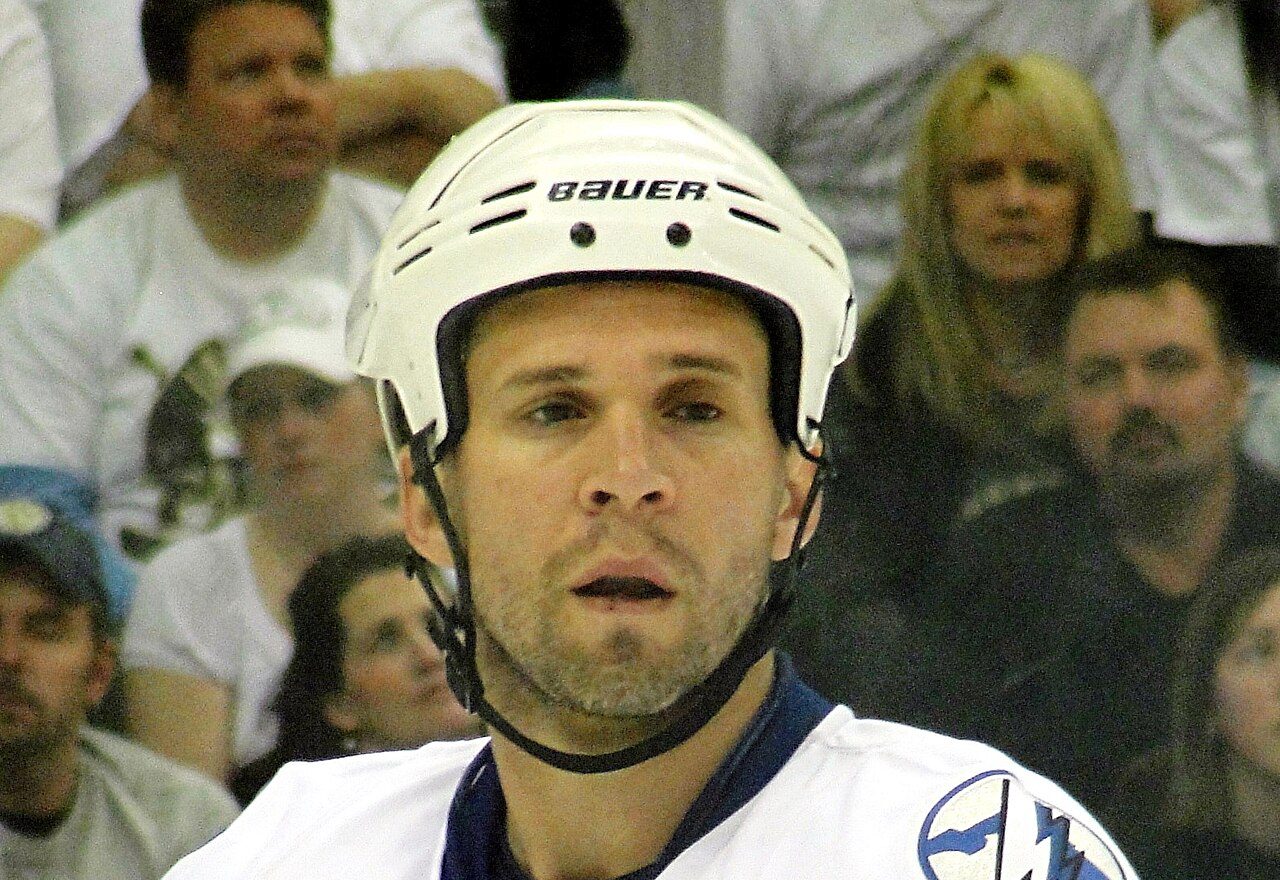
Photo: Michael Miller, CC BY-SA 3.0, via Wikimedia Commons