
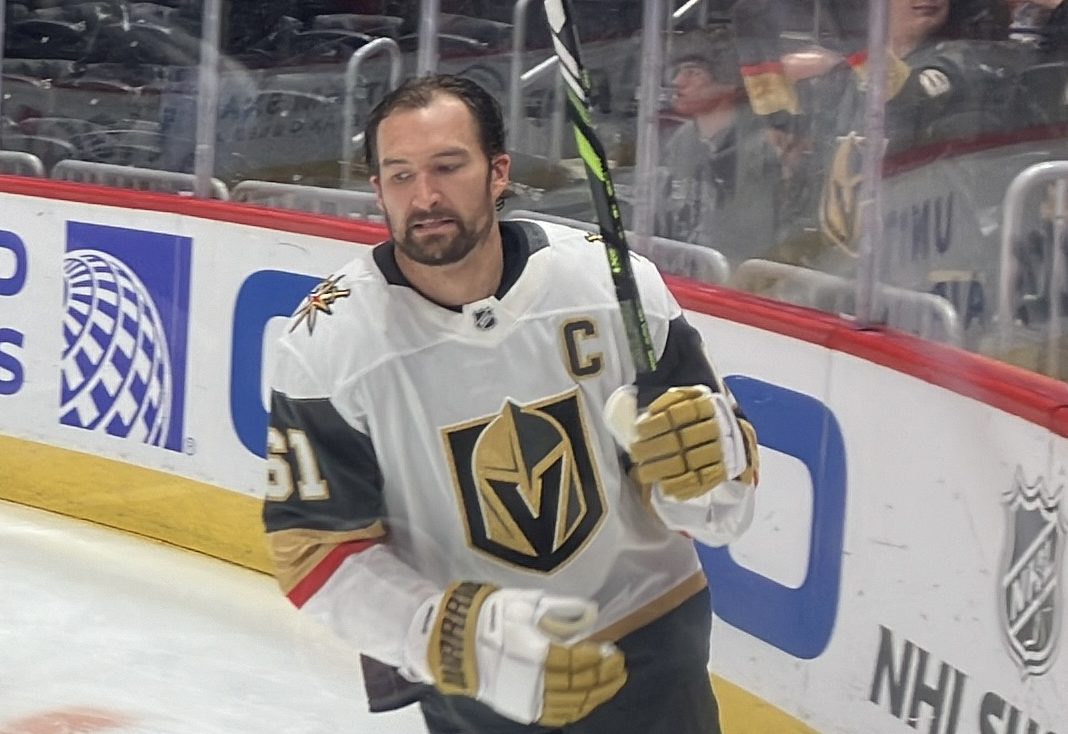
Three takeaways titles tell the story better than any draft slot ever could. Mark Stone was picked 178th overall, deep in the sixth round, and still grew into one of the NHL’s most distinctive right wings: part scorer, part puck thief, part matchup problem.
From Winnipeg rinks to the WHL
Stone was born on May 13, 1992, in Winnipeg, Manitoba, and his path into high-level hockey was a local one at first. He attended Westwood Collegiate and played in the Winnipeg Thrashers program, developing in the Manitoba Midget AAA Hockey League before reaching a wider stage at the 2008 Telus Cup. He finished that tournament as its leading scorer, an early hint that his hands and timing would carry him a long way.
Major junior brought him to the Brandon Wheat Kings, where he played in the WHL from 2008-09 through 2011-12. Those seasons shaped the player he would become. Stone could produce, but he also stood out for how cleanly and intelligently he played. He was named to the WHL East First All-Star Team in both 2010-11 and 2011-12, won the Brad Hornung Trophy as the league’s most sportsmanlike player in 2011-12, and was later named CHL Sportsman of the Year.
There was a family thread running through those years too. His older brother, Michael Stone, was carving out his own route as a defenseman, and the two met as opponents in junior. They even crossed paths at the 2010 Memorial Cup, one of those details that makes a hockey career feel less like a list of transactions and more like a lived story.
A late draft pick who forced his way in
For all he did in junior, Stone was not treated like a blue-chip prospect on draft day. The Ottawa Senators selected him in the sixth round of the 2010 NHL Entry Draft, 178th overall. He signed his entry-level contract with the club on May 28, 2011.
His NHL debut came in an unusual setting. Rather than easing into the league in a regular-season game, Stone first appeared for Ottawa in the 2012 playoffs, dressing in Game 5 against the New York Rangers on April 21, 2012. He recorded an assist that night, a small detail, but a memorable one.
The first NHL goal arrived on January 4, 2014, against Carey Price and the Montreal Canadiens. By then, the outlines of his game were becoming clear. Stone was not built around pure speed or flash. He read plays early, got his stick into traffic, and turned broken possessions into offense almost in the same motion.
Ottawa: breakout years and a bigger role
Stone’s real breakthrough came in 2014-15. He finished with 26 goals and 64 points in 80 games, tied Johnny Gaudreau for the rookie scoring lead, made the NHL All-Rookie Team, and finished as a Calder Trophy finalist. He also led the league in takeaways, the first of three times he would do that in his career.
That season captured what made him different. Plenty of wingers score. Fewer can tilt a game defensively without looking like defense-first passengers. Stone’s offense often started with a read in the neutral zone, a lifted stick along the wall, or a strip just inside the blue line. The puck would change hands, and suddenly Ottawa was attacking.
There was a setback in the 2015 playoffs. In Game 1 of the Senators’ first-round series against Montreal on April 15, Stone suffered a microfracture in his wrist after a slash from P.K. Subban. Subban received a major penalty and game misconduct on the play. Stone returned later in the series, but the injury interrupted what had been a sharp rise.
Ottawa committed to him soon after, signing him to a three-year, $10.5 million contract on June 25, 2015. In 2018, with his next deal unresolved deep into the summer, he and the Senators settled on a one-year, $7.35 million contract on August 3.
By the time his Ottawa chapter ended, Stone had become far more than a nice draft success story. In 366 games with the Senators, he scored 123 goals and added 188 assists for 311 points. He also led the NHL in takeaways again in 2015-16 and 2018-19, reinforcing his reputation as one of hockey’s best two-way forwards.
The trade that changed two franchises
The turning point came at the 2019 trade deadline. On February 25, 2019, Ottawa traded Stone to the Vegas Golden Knights. Days later, on March 8, he signed an eight-year, $76 million contract with Vegas, carrying a $9.5 million cap hit.
The fit was immediate. Vegas already had speed and pressure in its game; Stone added detail, control and a knack for ending plays before they developed. He did not need the puck all night to shape a game. A few reads, a few recoveries, and the flow could change.
Then came a franchise milestone. On January 13, 2021, the Golden Knights named Stone the first captain in team history. It was a natural role for a player whose value had always gone beyond scoring totals. He was the kind of winger coaches trust in every situation and teammates tend to follow.
Captain of a champion
The defining image of Stone’s career came in June 2023. Vegas won the Stanley Cup for the first time in franchise history, beating the Florida Panthers in five games, and its captain was at the center of the clincher.
In Game 5 of the Final, Stone scored a hat trick in a 9-3 victory. That made him just the sixth player in NHL history to record a hat trick in a Cup-clinching game. It was a loud night from a player whose best work is often quieter: stick position, anticipation, route choices, pressure at exactly the right moment.
That championship also put his captaincy in context. Stone became the first captain in Golden Knights history to lift the Cup, and he did it as the face of a team that had built its identity around structure, pressure and depth.
Injuries have been part of the Vegas years as well, especially back trouble, and they have limited his games at times. But when healthy, he has remained one of the club’s central players and one of the league’s most effective all-around wingers.
Canada duty and big-event production
Stone’s international résumé is strong, even if it took time to build. Early on, he played at the World U-17 Hockey Challenge for Canada West, then moved on to the 2012 IIHF World Junior Championship, where he helped Canada win bronze. He led the team with seven goals and 10 points and was named one of Canada’s three best players at the tournament.
At the senior level, he represented Canada at the 2016 IIHF World Championship and won gold. He returned for the 2019 World Championship and had one of the best international tournaments of his career, helping Canada to silver while being named tournament MVP and earning a spot on the media all-star team.
Those events fit the broader pattern of his career. Coaches trust him because his game travels. He can play in scoring roles, matchup roles, special teams, and late-game situations without needing a different style around him.
Why Mark Stone’s game stands out
Some players get labeled “two-way” because they are responsible enough not to hurt a line. Stone belongs in a different category. His defensive work is not a side note to his offense; it is often the source of it.
He has led the NHL in takeaways three times, and that number is more meaningful in his case than it is for most players. He does not chase steals for the sake of a stat. He disrupts possession in dangerous areas, often with quick hands and sharp angles rather than open-ice collisions. The result is that his line spends less time defending and more time attacking.
That profile has brought major recognition. Stone has been a Selke Trophy finalist multiple times, reflecting how seriously his defensive game is viewed around the league. He was also selected to the NHL All-Star Game in 2022.
And then there is the contrast that makes him easy to remember. Much of his game is controlled and calculated. His goal celebrations are not. When he scores, especially in a big moment, the reaction tends to be full volume.
Off the ice: family, roots and the details people remember
The most grounded parts of Stone’s personal story are also the most public. His parents are Rob and Jackie Stone, and his brother Michael also reached the NHL. That brother-versus-brother angle followed them from western Canadian junior hockey all the way into the professional game, giving his career a family dimension that fans tend to hold onto.
His Winnipeg roots matter too. Before the NHL, before the Vegas Golden Knights captaincy, before Mark Stone stats became a regular search term, there were local schools, local teams and a long development curve. He was not a can’t-miss prodigy handed a fast lane. He built his career step by step.
That is part of why his story has held up so well. A late pick became a top-line winger. A junior scorer became one of the best takeaway artists in the league. An Ottawa draft choice became the first captain in Vegas history and the captain of its first Stanley Cup team.
FAQ
What team does Mark Stone play for?
He plays for the Vegas Golden Knights.
When was Mark Stone drafted?
The Ottawa Senators selected him in the sixth round, 178th overall, in the 2010 NHL Entry Draft.
What position does Mark Stone play?
He plays right wing.
Has Mark Stone won the Stanley Cup?
Yes. He won the Stanley Cup with Vegas in 2023.
Where is Mark Stone from?
He was born in Winnipeg, Manitoba, Canada.
What is Mark Stone known for on the ice?
He is best known for his two-way play, especially takeaways, defensive reads and timely scoring.
Photo: The Kip, CC BY-SA 4.0, via Wikimedia Commons