
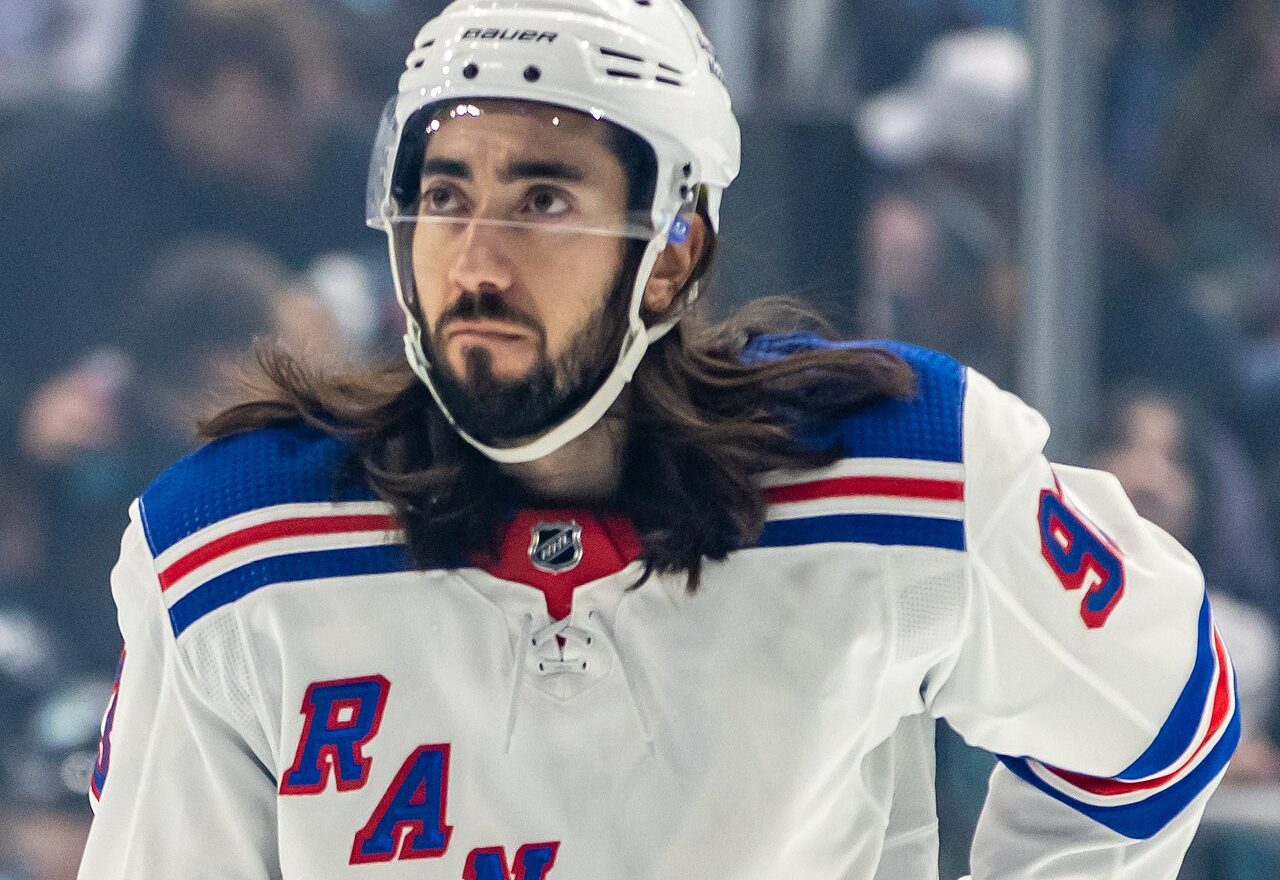
Five goals in one night will change the way a city sees a player. When Mika Zibanejad scored five times against Washington on March 5, 2020, the last one in overtime at Madison Square Garden, it felt less like a hot streak than a reveal. New York already knew the Rangers center could shoot. That game showed how quickly he could take over.
From Huddinge to Stockholm’s top junior programs
Born in Huddinge, Sweden, on April 18, 1993, Zibanejad grew up in a household that carried several identities at once. His father is Iranian, his mother Finnish, and hockey sat naturally in the middle of it. One family story has followed him for years: during the men’s gold-medal game at the 2006 Turin Olympics, Sweden and Finland were on different televisions in the home, a fitting snapshot for a kid with roots in both countries.
Before hockey became the clear path, he also played football. On the ice, he started with Hammarby IF and spent much of his childhood there before moving into stronger development environments. He joined AIK’s youth setup and then Djurgardens IF, where his progress accelerated against older, better competition.
That rise reached the senior level in the 2010-11 season. Zibanejad made his Elitserien debut for Djurgarden on December 7, 2010, and scored his first goal in the league on January 15, 2011. He played 26 regular-season games that year and finished with 5 goals and 9 points, enough to confirm what scouts already liked: the size, the right-handed shot, the hands in traffic, and the sense that offense could come in a hurry.
A top-10 pick and the Ottawa years
Ottawa selected him sixth overall in the 2011 NHL Draft, making him one of the first Swedish players taken that year and one of the more intriguing centers in the class.
His first season after the draft was a split one. Zibanejad appeared in 9 NHL games for the Senators in 2011-12, scored twice, and then returned to Djurgarden. The longer NHL runway opened the next season. From 2012-13 through 2015-16, he became a regular in Ottawa’s lineup and gradually moved from promising scorer to dependable top-six center.
By the end of his Senators tenure, he had played 281 games for the club and recorded 64 goals and 158 points. Those years mattered because they rounded out his game. He was never just a shooter. Ottawa used him in important minutes, and he learned the less glamorous parts of the position too: tracking back, handling defensive-zone work, taking faceoffs, and using his frame more effectively.
One of the biggest early moments of his career, though, came outside the NHL.
Sweden’s golden goal
At the 2012 World Junior Championship, Zibanejad scored the overtime winner in the gold-medal game against Russia. In Sweden, that goal has long been part of his story. It was the tournament’s defining moment and one of the clearest signs that he could handle pressure without looking rushed by it.
He later added another gold medal with Sweden at the 2018 IIHF World Championship. International play has never felt like a side note in his career; it has been one of the places where his calm in big moments has shown up most clearly.
The trade that changed everything
On July 18, 2016, Ottawa traded Zibanejad and a 2018 second-round pick to the New York Rangers for Derick Brassard and a 2018 seventh-round pick. At the time, it looked like a significant hockey trade. In hindsight, it became the pivot point of his NHL career.
New York gave him a larger stage and, eventually, a central role. His first season with the Rangers was interrupted by a broken fibula, but once he settled in, his production climbed. He scored 27 goals in 2017-18, then 30 in 2018-19, then 41 in just 57 games in 2019-20. That shortened season included the five-goal night against the Capitals, still one of the most memorable individual performances by a Rangers player in recent years.
His offense has often come in waves. That’s part of what makes him such a difficult read for opponents. He can be quiet for stretches, then suddenly score in bunches, especially on the power play. The one-timer from the left circle, the quick release off the rush, the ability to find soft ice in coverage, those have become familiar features of the Rangers attack.
He also built a reputation for big-event scoring. In the Winter Classic at Citi Field on January 2, 2024, he scored a hat trick against the Islanders, becoming the first player in NHL history to record three goals in a Winter Classic. It was exactly the kind of stage on which his game tends to sharpen.
A fixture in New York
As his years with the Rangers stacked up, so did the milestones. He played his 800th NHL game on December 27, 2023. On March 23, 2024, he reached 1,000 NHL games, all while remaining one of the club’s most important forwards at even strength and on the man advantage.
By the close of the 2023-24 season, he had passed 300 career NHL goals and continued to climb the Rangers’ all-time lists in power-play production. Team records and franchise rankings shift over time, so the safest way to frame his place is this: he has been one of the most productive power-play scorers of the Rangers era he plays in, and one of the central offensive figures of the club since arriving from Ottawa.
The contract reflects that status. Zibanejad signed a long-term extension with New York in 2021: eight years, $68 million, carrying an average annual value of $8.5 million through the 2029-30 season.
Trade speculation has surfaced at times, as it does with high-salary core players in major markets. Those reports should be treated as reports, not facts. Daily Faceoff discussed his situation during a stretch of public roster debate, and Blue Line Station also weighed possible scenarios. None of that changed the confirmed basics: he has a full no-movement clause, and published reports indicated he wanted to remain in New York.
What makes his game work
Zibanejad is listed at 6-foot-2 and around 200 pounds, and he plays center, though parts of his offensive game can resemble a winger’s. He is at his best when the puck is moving quickly and defenders are forced to respect his shot.
The release is the headline skill. He can beat goaltenders cleanly from distance, especially on the power play, and he doesn’t need much time to get the puck off his blade. But his game is broader than that. He kills penalties, takes difficult defensive assignments, and has long been trusted in late-game situations. Coaches value him because he can score 30-plus goals and still handle the details expected from a top-line center.
There is also a rhythm to his scoring that has defined his career. He is not merely a compiler. Hat tricks, multi-goal games, special-event moments, overtime finishes, those have a way of appearing on his resume.
Life away from the rink: DJ ZBad, family and background
Away from hockey, Zibanejad has one of the more distinct second identities in the NHL. Under the name DJ ZBad, he has released music and performed live, turning what might have been a hobby into a genuine creative outlet. His singles include “Forever,” “Can’t Go Back Home,” “Moves,” “Nobody,” and “By My Side.” He has also appeared at major festivals, including Summerburst in Gothenburg and Lollapalooza Stockholm.
That music career stands out partly because it feels serious rather than promotional. Teammates and fans may know him first as a Rangers forward, but the DJ ZBad project has had its own lane for years.
His personal life is relatively public by athlete standards, though the confirmed details are straightforward. He is married to Irma Helin, a former footballer and media personality, and the couple have a child. Reports about their home life in New York have appeared through public interviews and social media, but anything beyond those basic facts is best left in that category: public reporting, not something to embellish.
His family background has also remained an important part of how he is understood. He has spoken about his Swedish, Iranian and Finnish roots, and that mix has always given his story a little more texture than the standard hockey path. His maternal half-brother, Monir Kalgoum, is also a professional hockey player.
The shape of his career
The broad outline is easy enough to read now. Mika Zibanejad arrived in the NHL as a high draft pick with skill and size, learned the center position in Ottawa, and became a leading scorer in New York. Along the way he delivered a World Junior golden goal for Sweden, authored one of the great single-game performances in Rangers history, and built a second life in music that made him more than a familiar name on a scoresheet.
That combination is why his profile has held up so well. The production is real. The milestones are there. And the story has more character than most.
FAQ
How old is Mika Zibanejad?
He was born on April 18, 1993.
What position does Mika Zibanejad play?
He plays center and shoots right.
Which team does Mika Zibanejad play for?
He plays for the New York Rangers.
Has Mika Zibanejad won a Stanley Cup?
No. He has won international gold medals with Sweden, but not the Stanley Cup.
Is Mika Zibanejad also a DJ?
Yes. He releases music under the name DJ ZBad.
What is Mika Zibanejad’s contract?
He is on an 8-year, $68 million contract with the Rangers through the 2029-30 season.
Photo: Jenn G from Seattle, WA, CC BY-SA 2.0, via Wikimedia Commons